Choosing Between Welded and Woven Gabion Baskets
A retaining wall or erosion control project can fail years prematurely if you pick the wrong basket style for the job. Some gabion walls need to flex with shifting soil, while others hold their shape best when built rigid from the start. Getting this right starts with understanding welded versus woven gabion basket designs and how each one holds up over time.
At Pathmark Fabrication, we fabricate custom gabion baskets in Las Vegas for retaining walls and landscape features. This guide compares welded and woven gabions to help you choose the right style for your project.
Welded vs. Woven Gabion Baskets: Understanding the Two Designs
The sections below outline the construction and features of welded and woven gabion baskets.
Welded Gabion Baskets
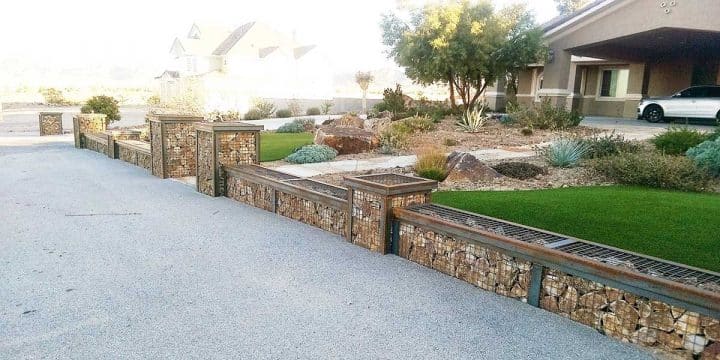
Welded gabion baskets are flat wire mesh panels welded together at each intersection, forming a rigid rectangular cage. Crews often fold the pre-welded panels into shape on site and pin the corners together with clips, creating a clean, uniform grid. Welded baskets tend to work best in a few common situations:
- Small retaining walls: The rigid frame maintains straight edges and a consistent profile across shorter residential runs.
- Decorative features: The even mesh pattern gives garden borders and freestanding elements a polished, structured appearance.
- Quick installations: Flat-pack panels are straightforward to position and connect, which can simplify assembly on accessible sites.
This design works well when visual consistency is as important as structural support.
Woven Gabion Baskets
Woven gabion baskets have a double-twist hexagonal pattern, making them ideal for:
- Large civil projects: Woven baskets can adapt to minor settlement along highway slopes or riverbank stabilization systems.
- Shifting soil: The interlocked joints flex with gradual ground movement instead of placing all the stress on rigid connections.
- Heavy-impact zones: Flood-control barriers can absorb repeated pressure from moving water while continuing to contain the stone fill.
These applications benefit from the basket’s ability to flex without losing overall stability.
Wire Mesh Panels and Galvanized Steel Wire Explained
Wire mesh panels and galvanized steel wire work together to determine how long gabion baskets last outdoors under heavy soil loads and weathering. The mesh pattern controls how well the wall holds stone fill in place, while the wire coating controls its resistance to rust. Wider mesh openings require larger stones, while geotextile may be placed behind the structure for filtration or soil separation.
Galvanized coating protects the wire from rust, but choosing the right fabrication materials ensures long-term corrosion resistance in harsh desert climates. Wire exposed to constant moisture or salt often needs a heavier coating or an added PVC layer for extra protection.
Choosing the Right Stone Fill Material
When comparing a welded versus woven gabion basket, consider how the stone fill suits the site and desired appearance. The right stone fill material must be larger than the basket openings so it remains securely contained after installation.
Size consistency also helps the stones settle evenly, reducing visible gaps and supporting a more stable finished structure. Rounded river rock creates a smoother look, while crushed granite provides a more angular finish that can lock together firmly inside the basket.
Which Gabion Type Suits Retaining Wall Construction?
The right basket for retaining wall construction depends on the scale of the wall and how much ground movement the site may experience. Welded baskets often suit smaller residential walls where a straight, uniform profile is important, while woven baskets are better suited to larger applications that require greater flexibility.
These structural differences can also guide practical gabion wall ideas for the property. A rigid design may complement a defined garden layout, whereas a flexible system may be more appropriate for sloped or erosion-prone areas.
Planning for Drainage Behind the Structure
Proper drainage helps prevent water pressure from building behind a gabion wall. Depending on the site, the installation may require a gravel drainage layer or a perforated pipe to redirect runoff safely.
The surrounding grade should also guide water away from vulnerable areas. Addressing drainage during the design stage helps the structure perform more reliably and reduces the chance of soil movement behind the baskets over time.
Trust Pathmark Fabrication for Your Gabion Project
Deciding between welded versus woven gabion basket designs comes down to how much flexibility your project needs and how it should look once finished. We fabricate both basket styles for retaining walls and landscape features throughout the Las Vegas Valley, highlighting the custom metal fabrication benefits for unique site requirements.
The benefits of gabion baskets in landscaping include structural support and a customizable stone-filled appearance. Call Pathmark Fabrication at (702) 745-1158 to discuss custom welded or woven gabion basket fabrication options with our team.