
Choosing the Right Materials for Outdoor Water Features
You’re planning a fountain beside your patio, where it will sit in direct sunlight for much of the day. As you explore landscape water features in Las Vegas, you wonder which materials will keep their appearance without demanding more upkeep than you can manage.
In this guide, Pathmark Fabrication explains what to consider when choosing the right materials for outdoor water features. You’ll learn how to compare construction options before committing to a design.
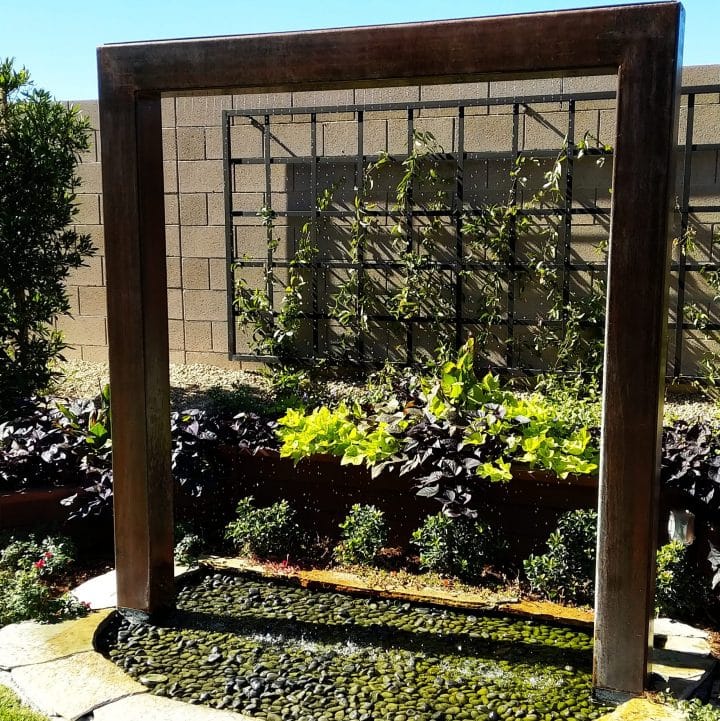
Define Your Fountain’s Role and Style
Decide whether your fountain will be a sculptural centerpiece or a compact accent beside a seating area. Picture its height and width from your patio or back door to judge whether it will stand out as intended.
Consider whether clean architectural lines or a more organic shape would complement your landscape.
Compare Common Fountain Materials
Compare these common options:
- Cast stone: A molded mixture of cement and stone aggregate creates detailed forms with a finish resembling quarried stone.
- Concrete fountains: Poured or precast concrete suits substantial architectural forms, particularly designs with bold shapes and clean lines.
- Fiberglass: This popular resin composite allows molded shapes that weigh less than comparable solid masonry pieces.
- Natural stone: Each variety has distinctive patterns and textures. Compare your choices, since granite is generally harder and less porous than marble.
- Metal: Stainless steel offers a sleek, contemporary appearance, while copper develops a patina that changes its finish over time.
Confirm the fountain’s material composition with the manufacturer before ordering, rather than judging its construction from photographs.
Match the Finish to Outdoor Exposure
When choosing the right materials for outdoor water features, consider how construction and protective finishes contribute to weather resistance. Check whether the coating provides UV protection, since prolonged sunlight can cause inadequately protected finishes to fade.
Water trapped in porous surfaces can also expand as it freezes and cause cracks, so follow the manufacturer’s winterization instructions rather than assuming an outdoor-rated fountain can operate in freezing weather.
Check Weight and Installation Requirements
Before adding a water feature to your landscape, confirm that the location can support its operating weight, including the water. Check delivery access and whether you need lifting equipment to place it.
Allow enough room for the basin while keeping essential equipment accessible. Keep the pump reachable without dismantling surrounding landscaping.
Keep Your Fountain’s Finish in Good Condition
Use surface-appropriate cleaning products to remove mineral deposits. Avoid abrasive tools unless the manufacturer approves them, and check whether the finish requires periodic sealing.
Water treatment must also suit the fountain’s construction. Unsuitable pH or excessive chlorine can contribute to staining or surface deterioration, so follow the product’s maintenance guidance.
Bring Your Design to Life With Pathmark Fabrication
Choosing the right materials for outdoor water features can feel overwhelming. At Pathmark Fabrication, we design and fabricate custom metal fountains, including stainless steel rain curtains and copper raining trees. We submit the proposed design for your approval before we begin fabrication.
Explore the benefits of water features as you consider your project. Call us at (702) 745-1158 to discuss your ideas and request a quote for a custom fountain.