How Does the Metal Fabrication Process Work?
Metal plays a role in nearly everything around you, from the frame of your car to the railings on your staircase. Understanding how raw metal becomes a finished product helps you make smarter decisions when starting a project. Pathmark Fabrication breaks down the metal fabrication process, step by step.
What To Expect From Custom Metal Work in Las Vegas Projects
Metal fabrication shows up in more places than most people realize. Residential gates, commercial shelving, and architectural accents all start as raw sheet material or steel stock before a fabricator shapes them into functional components. Working with experienced fabricators means you get precision, durability, and designs built to your exact specifications.
If you need custom metalwork in Las Vegas, knowing what the process entails helps you communicate your needs clearly. Fabricators use design software, specialized equipment, and skilled labor to bring your project to life. The result is a finished piece built to last in real-world conditions.
How Does the Metal Fabrication Process Start?
The metal fabrication process begins long before anyone touches a sheet of metal. Engineers use CAD software such as AutoCAD or SolidWorks to create detailed digital models of parts or structures, guiding every cut, bend, and weld that follows.
Once the design is approved, the fabricator selects the right material for the job. Common choices include aluminum, stainless steel, carbon steel, and copper. Each material brings different properties to the table, such as weight, strength, and corrosion resistance.
For complex projects, fabricators often build a working prototype first. That prototype is tested under real-world conditions before full production begins. This step catches design flaws early and saves time and money down the line. Knowing the benefits of custom metal fabrication helps in selecting the right technique for complex projects.
Cutting, Forming, and Shaping the Metal
After design comes the physical work of shaping the material. Metal cutting processes include laser cutting, which delivers the most precision, especially for intricate or detailed designs.
Plasma cutting works well on thicker metals that require more force to separate cleanly. Waterjet cutting uses a high-pressure stream of water mixed with an abrasive material, making it ideal for heat-sensitive metals. Choosing the right cutting method depends on the metal’s thickness, type, and intended use.
Metal forming processes transform flat sheets into three-dimensional parts. This category includes drawing, stamping, and punching. Drawing uses tensile force to pull metal through a die, while stamping presses shapes or letters into the surface without cutting all the way through.
Metal bending processes use brake presses and folding machines to create angles and curves. The material goes between a punch and a die, and pressure forces it to crease at the correct angle. These bends give structural parts their final shape before assembly begins.
Joining, Machining, and Finishing the Final Product
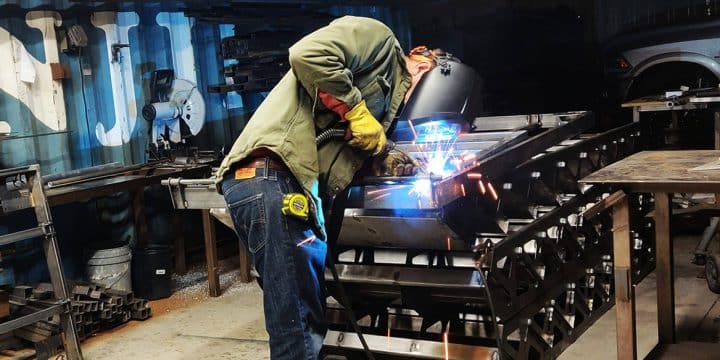
Once the individual pieces take shape, fabricators join them together. Welding and joining are the most common methods, using heat and pressure to fuse metal parts. Popular welding types include:
- MIG welding: Uses a continuous wire electrode and shielding gas for fast, consistent welds
- TIG welding: Uses a tungsten electrode for precise work on heavier metals and complex projects
- Flux-cored arc welding: Similar to MIG but uses a self-shielding wire, making it more portable
- Stick welding: Uses an electrode rod to create an electric arc that melts and fuses the metal
Machining operations like drilling, turning, and milling remove unwanted material to achieve precise dimensions. Iron and steel parts often go through CNC machining when tight tolerances are required. These machines follow digital instructions to cut with consistent accuracy every time.
Surface finishing techniques are the final step before delivery. These include painting, powder coating, polishing, and deburring. Finishing protects the metal from corrosion and gives it the appearance your project requires.
Powder coating is especially popular because it bonds directly to the metal surface and resists chipping, fading, and rust. Deburring smooths sharp edges left behind from cutting or machining. Both steps improve the safety and longevity of the finished product.
Pathmark Fabrication Gets the Job Done Right
We know how much detail goes into every stage of the metal fabrication process. At Pathmark Fabrication, we pair experienced craftspeople with modern equipment to deliver precise, durable results across Las Vegas, NV. Choosing the right metal fabrication materials is just one part of what we help you get right from the start.
Our team handles projects of all sizes, from custom architectural pieces to structural components for commercial builds. Call Pathmark Fabrication today at (702) 745-1158 to discuss your metal fabrication needs in Las Vegas.